What differences are there in the posture and movements of users between products that are easy to hold and use with one hand and those that are not? Let's take a vacuum cleaner as an example.
**Purpose of Evaluation**: This study evaluates the differences in posture, movements, and muscle strain of individuals when using user-friendly vacuum cleaners compared to those that are not user-friendly.
**Evaluation Method**: Various types of vacuum cleaners will be used to perform predetermined actions, and subjective and behavioral evaluations will be conducted to assess the factors influencing ease of use.
**Target Actions**:
- Cleaning debris on flooring
- Cleaning debris on carpets
- Cleaning gaps
- Cleaning corners
- Detaching and attaching the head, etc.
**Subjective Evaluation**:
- Ease of use
- Degree of strain on the body (shoulders, sides, back, etc.)
- Sense of debris removal
**Motion Evaluation using the Anakin System**:
- Posture and Movement: The Anakin System will be used to measure posture and movements (tilting and swaying of the torso in left-right and front-back directions) as well as hand movements (matching the vacuum cleaner's movements).
- Muscle Strain: Muscle strain in the hands, arms, shoulders, thighs, and torso will be measured.
**Evaluation Results**:
**Posture and Movement**: There are differences in posture (forward and backward tilt of the body) and the angle between the torso and thighs when using user-friendly vacuum cleaners compared to those that are not. Additionally, there are differences in the speed of hand movements.
**Muscle Strain**: There are also differences in muscle strain during cleaning between user-friendly vacuum cleaners and those that are not.

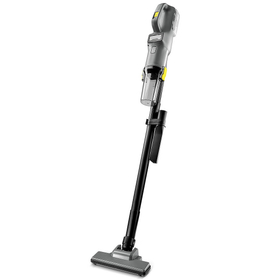
![[Anakin System Use Case] A product that is easy to use and can be held in hand (vacuum cleaner)](https://image.mono.ipros.com/public/product/image/dc5/2000526064/IPROS92901271009197341397.png?w=280&h=280)